what are you looking for?

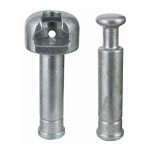
Power line hardware fittings affect how safely and efficiently an overhead line project is installed. For B2B buyers, EPC contractors, utilities, equipment manufacturers, maintenance teams, and distributors, the sourcing task is not only to buy metal parts. The real need is to match fittings with insulators, drawings, mechanical load, corrosion conditions, packaging requirements, and delivery plans.
In many transmission and distribution projects, insulator end fittings connect polymer insulators to the wider line hardware system. If the fitting type, size, surface treatment, or connection method is wrong, the product may look acceptable during purchasing but fail during site assembly. A practical sourcing decision should start with the application, then move to technical matching, quality risk control, and supplier selection.
Overhead line hardware fittings connect insulators, conductors, crossarms, poles, towers, clamps, and other power grid components. They must fit the installation interface, transfer mechanical stress, and withstand outdoor operating conditions. Because of this, power line fittings should not be selected by product name or unit price alone.
Buyers usually search for power line hardware fittings when they are working on a new transmission line, distribution line upgrade, composite insulator assembly, maintenance replacement, or export project. In these cases, a small mismatch can create a large delay. A wrong hole size, unsuitable clevis width, mismatched ball socket, unclear material, or weak packaging can affect installation and increase replacement cost.
The safer approach is to confirm the fitting as part of the complete assembly. The buyer should check the insulator type, fitting interface, rated load, material, surface treatment, drawing dimensions, and site conditions before placing an order.
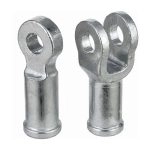
Insulator end fittings vary by connection method and application. A ball socket fitting, tongue clevis end fitting, Y clevis fitting, eye end, pin end, or pigtail end may serve a different installation purpose. Similar-looking fittings should not be treated as interchangeable unless the drawing and specification confirm it.
Ball socket insulator end fittings are commonly used with suspension insulator assemblies and high voltage power line projects. Buyers searching for 120kN ball socket insulator end fittings or 160kN ball socket end fittings for composite insulators should verify more than the load class. Ball size, socket design, fitting shape, drawing dimensions, material, and galvanized surface should all match the project requirement.
A tongue clevis end fitting is used where a clevis-tongue connection is required. Search terms such as 70kN tongue clevis end fitting or 70kN tongue clevis for polymer suspension insulator usually indicate that the buyer already has a known connection type. Even then, hole diameter, connection width, pin size, material, and surface treatment should be checked before production.
Y clevis fittings and eye end fittings are also selected according to the end connection design. They should be reviewed together with the insulator and the hardware they connect to. For replacement work, a sample photo with dimensions can reduce the risk of selecting the wrong configuration.
Pin end fittings and pigtail end fittings may be used in specific insulator or overhead line configurations. Their suitability depends on installation position, connection method, mechanical requirement, and product design.
A corona ring for high voltage polymer insulators may be required in certain high voltage or substation-related applications. The size, installation position, clamp design, and compatibility with the insulator assembly should be verified against the product specification and project requirement.
The key question is not “which fitting is common?” but “which fitting matches this insulator and this project?” Insulator end fittings for composite insulators should be selected according to the insulator type, installation direction, mechanical load, connection interface, and operating environment.
A suspension composite insulator may require different fittings from a line post insulator, pin type insulator, station post insulator, or railway-related insulator. The same voltage class does not mean the same mechanical design. The selected fitting must match the way force is transferred through the full assembly.
Mechanical load should also be reviewed carefully. Terms such as 70kN, 120kN, and 160kN are useful, but they are not complete specifications. Load class should be checked together with the line design, insulator specification, installation angle, and connected hardware.
For faster quotation and fewer errors, buyers should send drawings, sample photos, fitting type, load requirement, material requirement, surface treatment, quantity, and application details. For custom insulator end fittings, OEM/ODM requirements and reference models should be shared early.
Quality problems in overhead line hardware fittings often appear during installation, storage, or shipment. The most common issue is dimensional mismatch. Hole size, connection width, socket fit, bolt position, and assembly clearance can all affect field installation. Even a small difference can require rework or replacement.
Corrosion protection is another important concern. Hot dip galvanized power line fittings and galvanized forged steel insulator fittings are commonly selected for outdoor use, but the exact surface treatment should match the project environment. Coastal, humid, industrial, or long-storage conditions may require more careful confirmation.
Material and process requirements should also be clear. Forged steel fittings may vary by material, size, load, and configuration. If a project requires a specific material grade, inspection method, or surface treatment, the requirement should be confirmed before ordering.
Pre-shipment checks can reduce avoidable disputes. Buyers may request dimension checks, surface inspection, marking review, packing review, and document confirmation according to project needs. The goal is simple: the delivered fittings should match the agreed drawing and specification.
A complete inquiry helps an overhead line fittings supplier provide a more accurate quotation. Buyers should first define whether the fitting is for a transmission line, distribution line, substation project, railway electrification project, maintenance replacement, or new construction.
The technical information should include fitting type, drawing, sample photo if available, rated mechanical load, material requirement, surface treatment, insulator type, connection method, quantity, and key dimensions. If the order is for replacement, photos of the existing fitting and connected hardware are especially useful.
Commercial information also matters. Quantity, destination country, packaging requirement, shipping method, document requirement, and expected delivery schedule can affect quotation and production planning. Fast delivery is easier to support when technical details are confirmed early.
A suitable power line hardware fittings supplier should offer more than a product list. Buyers should evaluate whether the supplier can support product matching, drawing confirmation, technical communication, quality checks, and export coordination.
Product coverage is important for project buyers. A supplier that can provide ball socket fittings, tongue clevis fittings, Y clevis fittings, eye ends, pin ends, pigtail ends, corona rings, and related composite insulator fittings can simplify sourcing for overhead line projects.
Technical communication before production is also critical. A capable supplier should help confirm drawings, material, dimensions, fitting compatibility, surface treatment, packaging, and documents before the order moves forward. This is especially useful for EPC contractors, utilities, distributors, and maintenance teams that need to avoid site delays.
Sourcing polymer insulator end fittings and composite insulators through related supply channels can reduce compatibility risk when drawings and specifications are confirmed together. This is useful for buyers working with suspension composite insulators, line post insulators, pin type insulators, or other power grid products that require matched end fittings.
When the insulator and fitting are purchased from separate sources, the buyer must manage the connection interface carefully. Coordinated sourcing can make it easier to review the complete assembly, including fitting type, mechanical load, packaging, and shipment plan.
This approach may also support better total procurement cost control. Instead of sending several separate inquiries, buyers can combine drawings, quantities, and application requirements in one technical discussion.
Buyers comparing China power line hardware fittings supplier options should consider whether the supplier can support both hardware fittings and related insulator products. CECI presents a product range under High Voltage Insulators and Power Grid Hardware, including polymer composite insulators, overhead line hardware fittings and accessories, end fittings, FRP rods for insulators, surge arresters, fuse cutouts, glass insulators, and related power grid products.
For this sourcing topic, the most relevant category is Over Head Line Hardware Fittings & Accessories. The product range includes tongue clevis end fittings, forged galvanized pin ends fittings, corona rings for polymer insulators, ball socket insulator end fittings, Y clevis fittings, pigtail ends, and eye ends.
CECI can also be considered when buyers need custom fittings or project-based communication. The company background under About CECI describes CECI as a composite polymer insulator supplier and ODM/OEM manufacturer in China. Buyers should still confirm material, load, dimensions, surface treatment, inspection requirements, packaging, and delivery expectations before placing an order.
A practical next step is to send fitting type, drawing, load requirement, material specification, surface treatment, quantity, application, destination country, and delivery expectation through Contact CECI for quotation and technical confirmation.
Power line hardware fittings and insulator end fittings should be sourced according to real overhead line project requirements. The right fitting must match the insulator type, mechanical load, connection method, material, surface treatment, installation position, and drawing.
For project buyers, distributors, equipment manufacturers, and maintenance teams, the most useful supplier is one that can discuss technical details clearly, support product matching, and coordinate related power grid components. A clear inquiry with drawings, sample photos, load class, material requirements, quantity, application, packaging needs, and delivery schedule can reduce risk and improve quotation accuracy.
Q1: How do I know which power line hardware fittings are right for my project?
A1: Start with the application and connection method. A transmission line, distribution line, substation project, or maintenance replacement may require different fittings. Confirm the insulator type, fitting interface, rated load, drawing dimensions, material, surface treatment, and installation position before ordering.
Q2: What information should I send to an insulator end fittings supplier?
A2: Send the fitting type, drawing or sample photo, rated load, material requirement, surface treatment, insulator type, connection method, quantity, application, destination country, packaging requirement, and expected delivery schedule.
Q3: Can galvanized forged steel fittings be used for outdoor overhead lines?
A3: Galvanized forged steel fittings are commonly used in outdoor power line applications, but suitability depends on the project specification, environment, size, load, and surface treatment requirement. Corrosion protection should be confirmed before production.
Q4: Why do ball socket insulator end fittings need drawing confirmation?
A4: Ball socket insulator end fittings must match the insulator design and connected hardware. Load class alone is not enough. Ball size, socket configuration, dimensions, material, and surface treatment should be verified against the drawing.
Q5: Is it better to source composite insulators and end fittings from the same supplier?
A5: It can reduce compatibility risk when drawings, specifications, and assembly requirements are confirmed together. The final decision should still be based on technical match, inspection expectations, delivery plan, and total procurement cost.

 Room 1502, NO.12, Shangwu Waihuan Road, CBD, Zhengzhou, China
 +86-18937178812
 sales@gridinsulators.com


 October 8, 2026