what are you looking for?

Choosing the right composite insulators manufacturer is not only a price decision. For power transmission, distribution, substation, and railway electrification projects, the wrong insulator type, fitting configuration, creepage distance, or mechanical rating can delay installation, increase maintenance work, or create unnecessary long-term risk. A reliable purchasing decision should begin with the actual operating condition, then move to product structure, application matching, quality checks, delivery support, and supplier capability.
Composite insulators are commonly selected when project teams need lighter weight, easier handling, strong mechanical performance, good insulation performance, and better resistance to pollution flashover compared with traditional alternatives. For B2B buyers, the real question is not simply “what is a composite insulator?” The more important question is how to choose polymer composite insulators that fit the voltage level, installation position, load condition, pollution environment, project schedule, and procurement budget.
Power line buyers usually consider composite insulators because they are dealing with one or more practical project pressures: limited installation time, long-distance transportation, difficult terrain, polluted environments, or the need to reduce maintenance work after commissioning. In overhead power line projects, the insulator is not an isolated component. It affects conductor support, electrical clearance, tower or pole connection, mechanical stability, and long-term line reliability.
For transmission lines, a high voltage composite insulator may be selected when the project requires strong tensile performance, suitable creepage distance, and compatible end fittings. For distribution lines, composite pin insulators and composite line post insulators are often considered when installation space, pole structure, and maintenance convenience matter. For railway electrification, vibration, mechanical stress, and fitting compatibility become more important because the operating environment is different from a standard distribution line.
A buyer comparing polymer insulator manufacturer options should first define the application, not the price target. Unit price matters, but a low initial price can become expensive if the product does not match the line design, installation method, pollution level, or delivery schedule.
Different composite insulator types are designed for different electrical and mechanical roles. Selecting the wrong type can lead to drawing revisions, project delays, or mismatched fittings during installation.
Composite suspension insulators are commonly used where conductors need to be suspended or tensioned on overhead transmission lines. Buyers searching for composite suspension insulator solutions should pay close attention to mechanical load, end fitting type, string configuration, creepage distance, and the line’s voltage class. For transmission projects, it is risky to choose only by appearance or voltage rating. The complete application condition should be checked against the product specification and project drawing.
Composite pin insulators are often used in overhead distribution systems where conductors are supported on poles. When buyers search for composite pin insulator suppliers, they are usually trying to match voltage class, conductor arrangement, mounting style, and environmental exposure. In this category, installation convenience and product consistency are important because distribution networks often involve repeated use across many poles or line sections.
Composite line post insulators are used when rigid conductor support is needed. Horizontal and vertical configurations may vary by pole structure, conductor direction, and installation design. A composite line post insulator should be selected by checking electrical insulation requirements together with bending load, mounting base, end fitting design, and conductor support method. If a project involves existing poles or retrofitting work, drawings should be reviewed before bulk ordering.
Railway composite insulators are used in railway-related power and support applications where mechanical strength, vibration resistance, fitting design, and dimensional compatibility can be critical. For railway electrification projects, buyers should avoid assuming that a standard overhead line insulator can be used without technical review. The application, installation position, operating environment, and connection requirements should be verified before confirming the order.
A good composite insulator inquiry should include more than a product name. The more complete the technical information, the easier it is for a supplier to recommend a suitable product and reduce communication time.
Voltage rating is the first basic requirement, but it is not enough by itself. Buyers should also define whether the product will be used in a transmission line, distribution line, substation, or railway project. The operating environment, altitude, temperature range, pollution level, and installation position may affect the final selection.
Creepage distance is especially important in coastal, industrial, desert, or high-pollution areas. If a line operates in a polluted environment, the shed profile and creepage requirement should be checked carefully. A pollution resistant composite insulator should be selected according to the actual site condition and project specification, not only by standard catalog wording.
Mechanical load is another common source of procurement mistakes. Suspension applications, line post applications, pin type applications, and railway support applications place different stresses on the product. Tensile load, bending load, and fitting connection must be reviewed with the installation design. A product that appears suitable electrically may still be unsuitable mechanically.
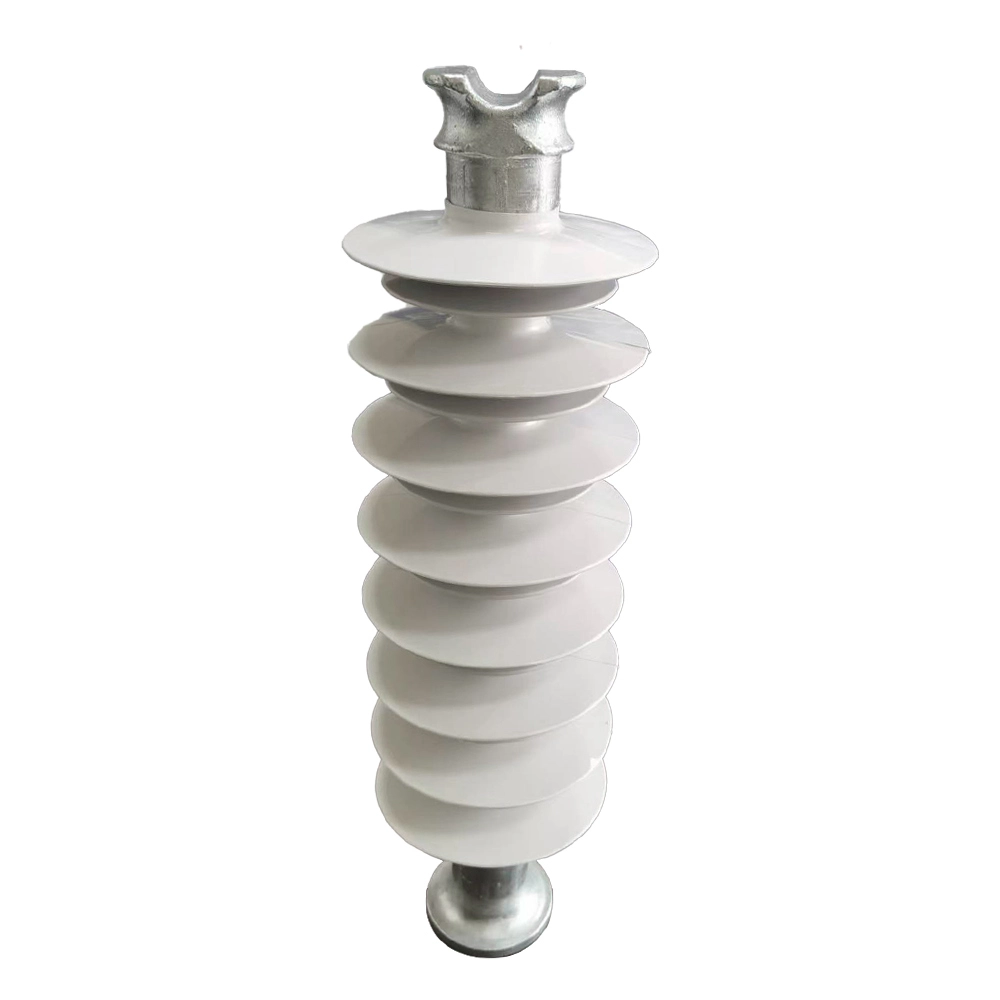
The main structure of a silicone rubber composite insulator typically includes a core rod, housing, sheds, and metal fittings. Material quality, bonding, fitting design, and surface performance all affect long-term use. However, exact performance should always be verified against the product specification, project drawings, and agreed inspection requirements.
Many purchasing problems begin before production. The most common mistake is choosing only by the lowest unit price. Competitive pricing is important, especially for large power line projects, but the real cost includes technical confirmation, rejected products, delayed shipment, installation mismatch, replacement work, and after-sales communication.
Another frequent mistake is ignoring routine testing and pre-shipment checks. Buyers should confirm what inspection steps are required before ex-works, which documents are needed, and whether the product design should be technically verified for the intended electrical and mechanical characteristics. For project-based procurement, quality control should be discussed before mass production, not after delivery.
A third mistake is delaying confirmation of drawings, fittings, marking, packaging, and shipping requirements. End fittings are especially important because composite insulators must connect properly with power line hardware, poles, towers, crossarms, or railway structures. Even when the insulator body is suitable, the wrong fitting can cause installation problems. Packaging should also match export handling, transportation distance, and site storage conditions.
A qualified composite insulator supplier should be evaluated by product matching ability, technical communication, production coordination, quality control, and export support. Buyers should look beyond a single quotation sheet.
Product range matters because different projects require different solutions. A supplier that covers composite suspension insulators, composite pin insulators, composite line post insulators, post insulators, and railway composite insulators can support more complete project discussions. This is useful for EPC contractors, utility procurement teams, equipment manufacturers, distributors, and maintenance teams that need consistent sourcing across multiple applications.
Customization and technical support are also important. Drawings, end fittings, creepage distance, voltage class, color, housing design, and packaging may vary by project. A supplier should be able to review the inquiry details and help buyers confirm practical requirements before production.
Quality control should be specific and documentable. Buyers can ask about material checks, design verification, routine testing, final inspection, packing inspection, and shipment documentation. If a project requires a specific standard, certificate, or test report, it should be discussed clearly during quotation and confirmed in writing.
Delivery capacity should be judged by communication speed, production planning, order coordination, and export experience. Fast delivery does not mean skipping technical confirmation. It means the supplier can respond quickly, clarify requirements early, and coordinate production and shipment in a way that supports the project schedule.
For buyers comparing China composite insulator manufacturer options, CECI offers a relevant product direction for power grid procurement. The company’s website presents CECI as a supplier of High Voltage Insulators and Power Grid Hardware, with product categories covering polymer composite insulators, glass insulators, hardware fittings and accessories, FRP rod for insulators, surge arresters, and fuse cutouts.
For this topic, the most relevant product category is polymer composite insulators, including suspension type, pin type, post type, line post products, and railway-related composite insulator options. This product coverage can help buyers who need to source insulators for transmission, distribution, substation, or railway applications from a supplier familiar with power grid components.
CECI’s positioning is especially practical when buyers need a balance of cost-effective sourcing, technical communication, and product matching. Competitive pricing should be considered together with the correct design, required fittings, inspection expectations, packaging, and delivery schedule. For buyers who need to understand the company background before sending an inquiry, About CECI provides context on the company and its product direction.
The best purchasing approach is to prepare a clear inquiry package. Before contacting Contact CECI, buyers should collect the voltage rating, application, quantity, drawings or reference photos, end fitting requirements, creepage distance if available, operating environment, destination country, expected delivery time, and any required documents. Clear information helps reduce back-and-forth communication and supports a more accurate quotation.
Composite insulators should be selected according to real project conditions, not only by catalog name or lowest unit price. Buyers should confirm the application first, then review voltage rating, creepage distance, mechanical load, installation position, fitting design, material requirements, inspection expectations, packaging, and delivery schedule. This process reduces the risk of ordering products that look similar but do not match the actual line design.
For transmission, distribution, substation, and railway projects, a reliable composite insulator manufacturer should provide suitable product options, practical technical communication, consistent quality control, and responsive quotation support. Buyers preparing a new inquiry can send the application, drawings, quantity, voltage class, fitting requirements, operating environment, and delivery expectations to receive a more accurate recommendation and quotation.
Q1: How do I know which composite insulator is right for my power line project?
A: Start with the application. A transmission line may require a composite suspension insulator, while a distribution pole may need a composite pin insulator or composite line post insulator. The final choice depends on voltage rating, creepage distance, mechanical load, installation position, end fittings, and environmental conditions.
Q2: Can composite insulators be used in polluted or coastal environments?
A: Composite insulators may be suitable for polluted, coastal, industrial, or dusty environments, but the creepage distance, shed profile, housing material, and project requirements should be checked carefully. Buyers should provide the operating environment during inquiry so the supplier can review whether the selected silicone rubber composite insulator matches the condition.
Q3: What information should be sent to a composite insulator supplier for quotation?
A: A practical quotation request should include voltage rating, product type, application, quantity, drawing or reference photo, mechanical load if available, creepage distance if specified, fitting type, destination country, packaging requirement, and expected delivery schedule. More complete information usually leads to faster and more accurate supplier feedback.
Q4: Why should buyers not choose composite insulators only by price?
A4: A low unit price may not reflect the total procurement cost. If the insulator has the wrong fitting, unsuitable mechanical rating, insufficient technical confirmation, weak packaging, or delayed shipment, the project may face extra cost later. Buyers should compare price together with product suitability, inspection process, delivery support, and supplier communication.
Q5: Is a railway composite insulator different from a standard power line insulator?
A5: Railway composite insulator selection can involve different mechanical, vibration, installation, and fitting requirements. A standard power line product should not be assumed suitable without review. The railway application, installation drawing, load condition, and connection method should be verified before ordering.

 Room 1502, NO.12, Shangwu Waihuan Road, CBD, Zhengzhou, China
 +86-18937178812
 sales@gridinsulators.com


 October 8, 2026