what are you looking for?

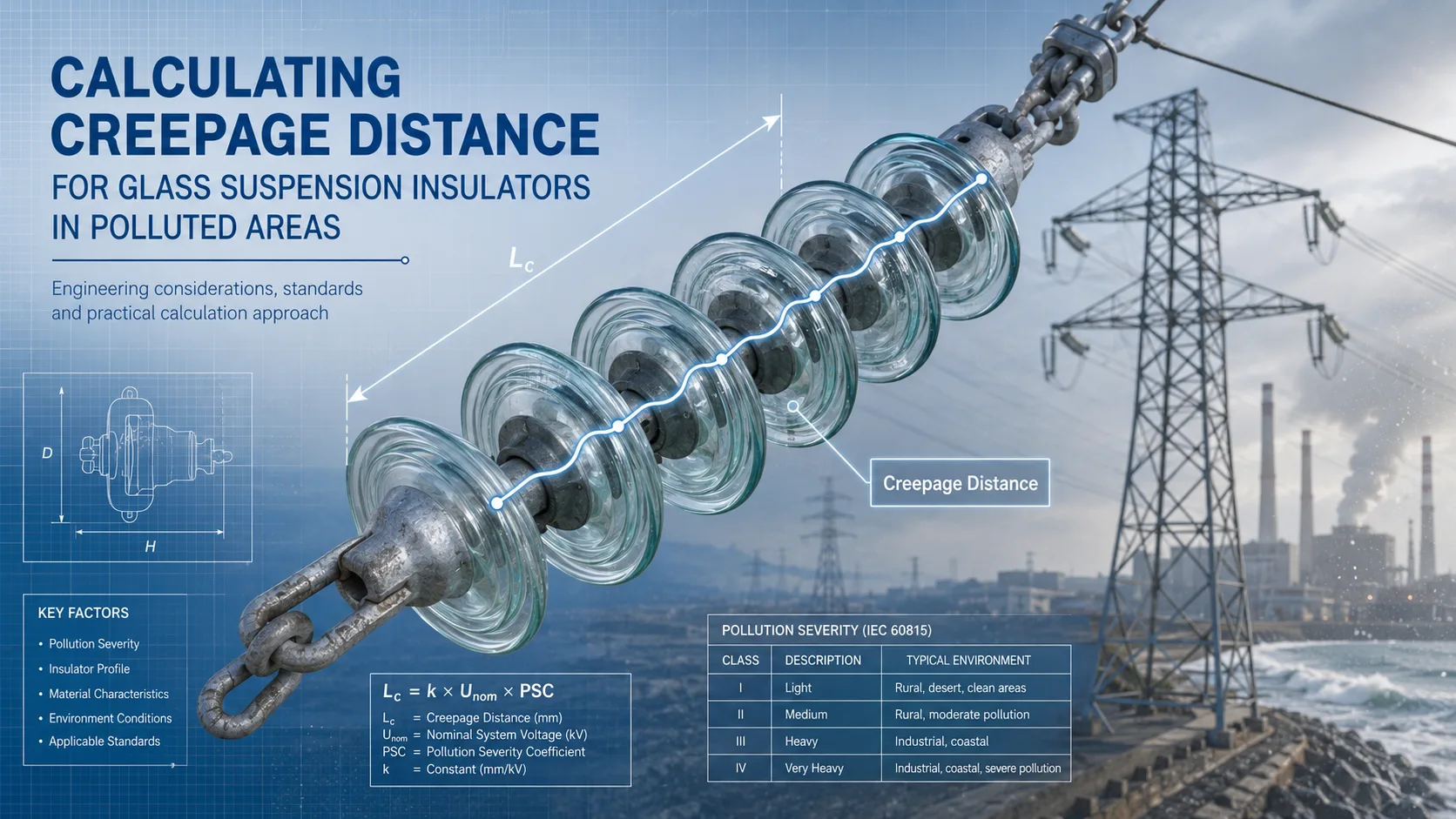
When engineers calculate creepage distance for glass suspension insulators in polluted areas, the goal is not only to match a voltage level. The real task is to confirm whether the insulator string has enough surface leakage path, dry arcing distance, spacing, mechanical strength, and profile suitability for the site pollution level. Coastal salt fog, industrial dust, desert pollution, high humidity, and low rainfall can all change the insulation requirement and increase the risk of pollution flashover.
Glass suspension insulators are widely used in overhead lines, substations, railway electrification systems, and industrial power networks. Key purchasing parameters include rated voltage, mechanical failing load, creepage distance, arcing distance, diameter, insulator type, material specification, and standard compliance.
Creepage distance is the distance along the surface of the glass insulator between two conductive parts. Arcing distance is the shortest air gap between energized and grounded parts. Both matter, but they solve different risks. Creepage distance helps control surface leakage current under pollution and moisture. Arcing distance affects air flashover performance and insulation coordination.
For B2B buyers, this distinction matters during replacement. A new glass disc may have enough creepage distance per unit, but if its spacing, connection length, fitting type, or string length does not match the existing line, the replacement may create installation or clearance issues. Before placing an RFQ, confirm single-disc creepage distance, arcing distance, spacing, connection type, mechanical failing load, and tower clearance.
A clean inland line and a coastal or industrial line may use the same system voltage but require different glass suspension insulator configurations. Pollution deposits can become conductive when wet, especially under fog, dew, salt mist, light rain, or high humidity. That is why polluted area insulator selection should consider site pollution severity, natural washing, line exposure, and maintenance access.
Industry guidance discussed by INMR notes that IEC/TR 60815 and IEC/TS 60815 are used by power utilities for selecting insulators in polluted outdoor environments, including glass and porcelain insulators. The selection process considers pollution type, pollution severity, specific creepage distance, profile, and dry arcing distance rather than voltage alone.
Specific creepage distance, often shortened to SCD, links the required leakage distance to the system voltage. In practical calculation, engineers first identify the pollution severity, then choose a required SCD or USCD value based on the project specification, utility practice, or IEC 60815-related method.
ESDD and NSDD are important because pollution is not only “dust on the surface.” ESDD reflects soluble salt deposit density, while NSDD reflects non-soluble deposit density. INMR notes that IEC/TS 60815 recognizes soluble and insoluble pollution components, and also notes that creepage length is not the sole determining parameter in polluted insulator selection.
For procurement, the next step is simple but important: translate site pollution data into a required total creepage distance, then compare that requirement with the creepage distance per glass disc.
The same creepage value may perform differently in different environments. Coastal areas often combine salt fog, high humidity, and low natural washing. Industrial areas may contain cement dust, chemical particles, smoke, or metallic contamination. Desert areas may have dust accumulation, sand, low rainfall, and strong wind.
For that reason, the calculation should not end with a number. The buyer should also review insulator profile. Standard glass may be suitable for light pollution and good rain washing. Heavy salt fog, industrial pollution, or repeated pollution flashover may require a pollution-resistant profile, double umbrella design, aerodynamic profile, or other project-specific solution.
A practical creepage distance calculation follows this logic:
| Step | Calculation check |
|---|---|
| 1 | Confirm system highest voltage, usually Um |
| 2 | Confirm pollution severity and required SCD/USCD |
| 3 | Calculate total required creepage distance: Um × SCD/USCD |
| 4 | Divide total required creepage distance by creepage distance per disc |
| 5 | Round up and verify against product specification |
INMR gives a 132 kV example using system highest voltage, required SCD, and creepage distance per glass disc, with the number of discs calculated from total required creepage distance divided by creepage distance per disc. It also shows that dry arcing distance can require a separate disc-count check.
After calculation, engineers can compare product data. For example, the CECI glass insulator category lists pollution resistant glass insulator U70BP with 400/450 mm creepage distance options, while glass suspension insulator U300B appears in a U300B/U420B/U550B series with 485/550/620 mm creepage distance options. These values should be verified against the product specification and project drawings before selection.
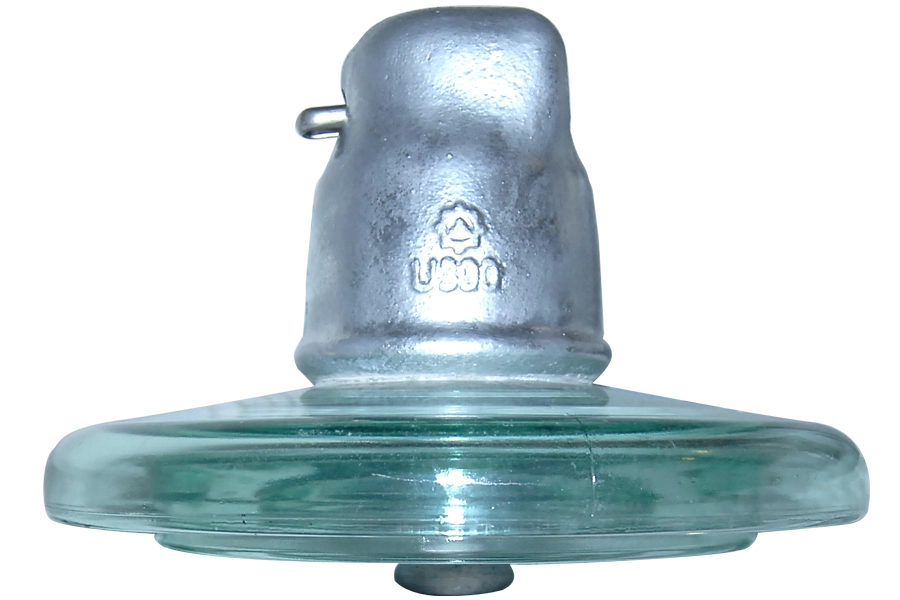
Creepage distance does not replace the need to check dry arcing distance. A string can meet the creepage requirement but still be unsuitable if the dry arcing distance, string length, tower clearance, or connection hardware does not fit the line design.
For replacement projects, compare the existing insulator string against the proposed unit. Confirm disc spacing, total string length, fitting type, mechanical failing load, arcing distance per disc, and conductor hardware. If the line has a history of pollution flashover, visible contamination, pin corrosion, or repeated washing, the replacement decision should also include profile selection and maintenance strategy.
Standard glass suspension insulators can be suitable where pollution is light, rainfall is sufficient, maintenance access is convenient, and the required creepage distance can be met without changing the line geometry. In harsher polluted areas, a pollution resistant glass insulator may be more appropriate, especially when the line is exposed to salt fog, industrial contamination, low rainfall, or recurring flashover risk.
CECI lists multiple glass insulator options through its CECI high voltage insulator manufacturer site, including products designed for overhead power line applications. Its glass product range includes standard suspension units, pollution-resistant units, double umbrella designs, and aerodynamic profiles.
After the disc number is calculated, profile selection should match the pollution source. A double umbrella glass insulator can be considered where higher creepage distance and anti-pollution profile behavior are important. CECI’s glass category lists double umbrella disk glass insulator models with 450 mm creepage distance. Aerodynamic glass insulators may be useful where dust and sand accumulation are the main concern; the product description notes an open design intended to reduce dust and sand accumulation on the lower surface and allow wind self-cleaning.
These profiles should not be selected only by name. The final choice depends on voltage, mechanical load, pollution type, creepage distance, installation space, fittings, and maintenance conditions.
Before replacing an existing glass insulator string, compare both electrical and mechanical requirements. Check the current disc count, total creepage distance, single-disc spacing, dry arcing distance, mechanical failing load, fitting type, tower clearance, and failure history. If the existing string has repeated flashover or cleaning cycles are becoming shorter, the issue may be insufficient creepage distance, unsuitable profile, severe site pollution, or a combination of these factors.
A qualified supplier should help translate the calculation into a practical product selection. China Energy and Chemical Industry Co., Ltd. focuses on composite insulators, glass insulators, and power line fittings, and uses First Article Inspection before batch production, with re-validation when processes, molds, materials, or equipment change.
For an accurate high voltage glass insulator RFQ, send system voltage, highest system voltage, pollution level, ESDD/NSDD if available, required creepage distance, required dry arcing distance, mechanical failing load, existing model, drawings, field photos, fitting type, quantity, destination, and application environment.
Procurement teams can review company background through about CECI and then submit project details through contact CECI for glass insulator RFQ. Include the calculated total creepage distance, current string data, and any maintenance or flashover history so the supplier can recommend a suitable glass suspension insulator for polluted areas.
Creepage distance calculation for glass suspension insulators in polluted areas should follow a practical sequence: confirm system highest voltage, identify pollution severity, calculate the required total creepage distance, divide by the creepage distance per disc, then verify dry arcing distance, spacing, string length, fittings, and mechanical load. The final product choice should also consider whether standard glass, pollution resistant glass, double umbrella glass, or aerodynamic glass is more suitable for the site.
For RFQ preparation, provide voltage, mechanical load, creepage distance target, arcing distance, existing drawings, product photos, pollution environment, failure history, and target quantity. This helps reduce selection errors and supports a clearer supplier recommendation.
A: Confirm system highest voltage and the required SCD or USCD for the pollution level. Then calculate required total creepage distance as Um × SCD/USCD, divide by the creepage distance per disc, and round up.
A: The disc count depends on system voltage, pollution severity, required creepage distance, single-disc creepage distance, dry arcing distance, spacing, profile, and project standard. It should not be selected by voltage alone.
A: No. Creepage distance follows the insulator surface. Arcing distance is the shortest air gap between conductive ends. Polluted area selection should check both parameters.
A: IEC 60815-related methods help engineers select and dimension insulators for polluted conditions by considering pollution severity, creepage distance, site pollution measurements, profile, and material behavior.
A: Light pollution with good natural washing may allow standard glass. Heavy pollution, coastal salt fog, industrial dust, low rainfall, or repeated flashover risk may require pollution resistant glass, double umbrella glass, or another suitable profile.

 Room 1502, NO.12, Shangwu Waihuan Road, CBD, Zhengzhou, China
 +86-18937178812
 sales@gridinsulators.com


 September 17, 2026