what are you looking for?

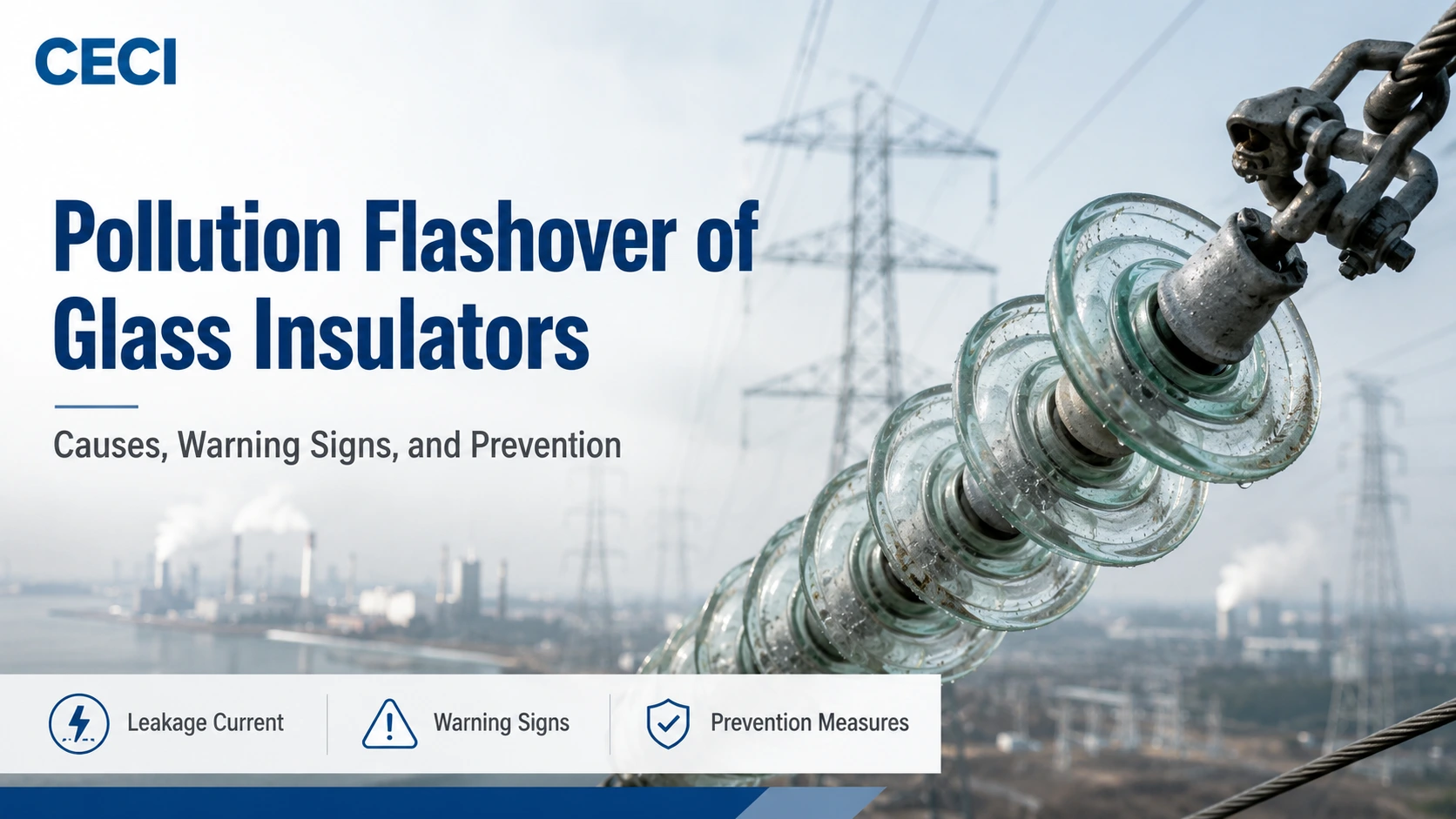
Pollution flashover of glass insulators usually occurs when surface contamination, moisture, and insufficient insulation margin combine on an overhead transmission line. For engineers, maintenance teams, and B2B buyers, the key question is not only what caused the flashover, but whether the existing glass suspension insulator can still be maintained safely or should be replaced with a more suitable pollution-resistant profile.
Pollution flashover is a surface insulation problem. Dry dust or salt deposits may not create an immediate fault, but when the surface becomes wet from fog, dew, light rain, salt mist, or high humidity, the contamination layer can become conductive. This may increase leakage current and create local dry bands. Once the electrical stress across these dry bands becomes high enough, arcing can develop along the insulator surface.
Dirt, pollution, salt, and water on high-voltage insulators can create conductive surface paths that increase leakage current and flashover risk; outdoor insulators are therefore shaped to increase creepage length and reduce surface current paths.
The most common trigger is not contamination alone. It is wet contamination. In coastal areas, sea salt can settle on glass discs and metal fittings. In industrial areas, cement dust, smoke, chemical residue, or metallic particles can accumulate. In desert or low-rainfall regions, dust may remain on the insulator surface for long periods because natural washing is limited.
Maintenance teams should treat repeated leakage current, visible discharge marks, or flashover during humid weather as warning signals. The next step is to collect site data, not to order a replacement only by voltage class. Useful data includes pollution type, rainfall, humidity, previous trip records, cleaning history, and the existing insulator’s creepage distance.
Coastal salt fog, industrial dust, and airborne sand affect glass insulators in different ways. Salt fog becomes conductive quickly under moisture. Industrial pollution may create uneven surface conductivity. Dust-heavy areas may reduce the effect of natural cleaning, especially during long dry seasons.
Standard glass insulators may still be suitable in moderate environments with regular inspection and washing access. However, in areas with repeated pollution flashover, short cleaning intervals, or difficult tower access, the line should be reviewed for higher creepage distance, a different shed profile, or a pollution resistant glass insulator.
Pollution flashover rarely appears without warning. Before a major line fault, maintenance teams may notice visible contamination, unusual discharge activity, or operational patterns that repeat under specific weather conditions.
Field inspection should focus on both the glass discs and the fittings. Warning signs include white salt deposits, dark tracking marks, uneven contamination, broken or self-broken glass units, corrosion around caps and pins, or arc marks near the energized end of the string. During night or early-morning inspections, abnormal discharge sound or light may also indicate surface stress.
Operational records are just as important. If faults occur after fog, light rain, strong coastal wind, or industrial emission events, pollution flashover should be considered. If washing reduces faults only temporarily, the existing profile may not match the service environment.
Leakage current monitoring can help move maintenance from a fixed schedule toward a risk-based approach. Recent research on cup-and-pin glass insulator strings uses leakage current features and applied voltage to estimate flashover probability and support asset management decisions.
Replacement evaluation becomes more reasonable when repeated flashover occurs on the same line section, cleaning frequency keeps increasing, maintenance access is difficult, or outage cost is high. The goal is not to replace every polluted glass insulator, but to identify where cleaning, inspection, or the current creepage distance can no longer keep the risk within an acceptable range.
Rated voltage is only the starting point. In polluted transmission lines, buyers and engineers should also review creepage distance, arcing distance, string length, mechanical failing load, fitting type, and pollution level.
Creepage distance is the surface path between conductive parts along the insulator. In polluted or airborne sea-salt areas, minimum creepage distances often need to be increased compared with clean environments.
For a practical RFQ, technical teams should provide system voltage, highest system voltage, mechanical load, required creepage distance, arcing distance, Equivalent Salt Deposit Density (ESDD)/Non-soluble Deposit Density (NSDD) data if available, altitude, rainfall, humidity, and whether the line operates in coastal, industrial, desert, or mixed pollution conditions. If ESDD and NSDD are not available, site photos, fault history, and cleaning records can still help the supplier make an initial recommendation.
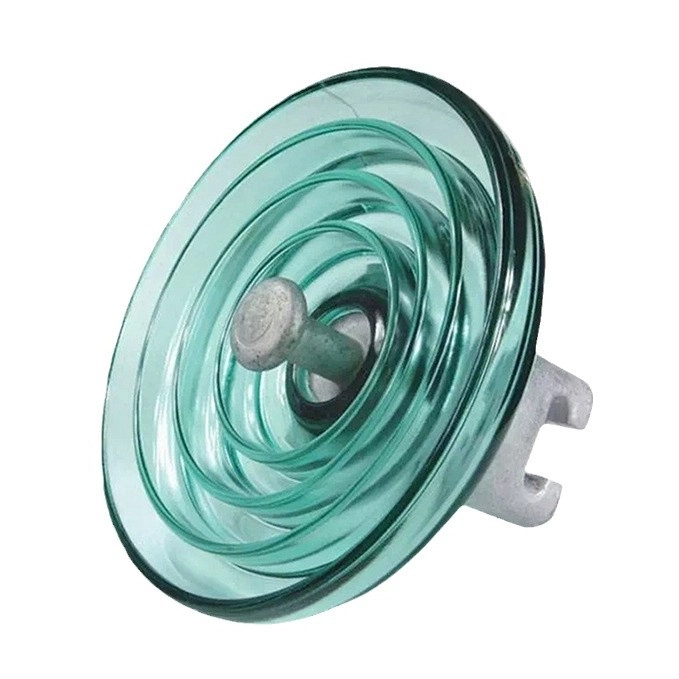
A standard glass suspension insulator can be appropriate for many outdoor transmission lines when pollution is moderate and maintenance is practical. In harsher environments, an anti-pollution profile may be needed to increase creepage distance, reduce contamination-related risk, or improve performance under wet pollution.
For polluted transmission lines where standard glass units show repeated flashover risk, a pollution resistant glass insulator U70BP can be reviewed as part of the profile and creepage distance evaluation before replacement. CECI also provides glass insulators for overhead lines and substations through its broader CECI high voltage insulator manufacturer product range.
Prevention should match the actual cause. If the issue is seasonal contamination and the line is accessible, maintenance may be enough. If flashover risk is driven by severe salt fog, industrial deposits, or insufficient creepage distance, design changes may be needed.
Washing can reduce surface contamination, especially before humid seasons or after heavy coastal salt deposition. Inspection should focus on high-risk spans, line sections near the sea, industrial plants, cement facilities, mining areas, or dusty corridors. Teams should compare fault records with weather and cleaning intervals.
This approach fits lines where contamination is controllable and cleaning clearly reduces risk. It is less suitable when flashover returns quickly after washing, tower access is difficult, or repeated outages affect critical power supply. In those cases, the next step should be a profile or replacement review.
Long-term prevention usually involves one of three paths: increasing creepage distance, selecting a better anti-pollution glass profile, or evaluating coating in severe pollution zones. The right choice depends on contamination type, voltage level, mechanical load, line clearance, and maintenance strategy.
A qualified supplier should help buyers compare standard glass, pollution resistant glass, double umbrella profiles, aerodynamic profiles, and coated options without treating one design as suitable for every line. Product suitability should be verified against the product specification and actual operating environment.
When pollution flashover has already occurred, procurement should not start with price alone. The buyer first needs to define the fault pattern, operating environment, and replacement constraints.
Replacement should be considered when repeated faults appear in the same section, cleaning intervals become too short, visible flashover marks remain after maintenance, damaged units increase, fittings show corrosion, or the existing creepage distance does not match the pollution condition. If the line is critical, difficult to access, or located in high-salt coastal areas, replacement evaluation may be needed earlier.
China Energy and Chemical Industry Co., Ltd. works with glass insulators, composite insulators, and power line fittings, and its production control includes First Article Inspection before batch production and re-validation when processes, molds, materials, or equipment change.
Buyers reviewing supplier capability can learn more through about CECI.
A useful RFQ should include more than a product name. Send the existing model, voltage level, mechanical failing load, creepage distance, arcing distance, fitting type, string length, line photos, damaged unit photos, pollution description, cleaning history, target quantity, and project location conditions.
For replacement discussion, CECI can review application details through contact CECI for glass insulator RFQ. Providing drawings, site photos, flashover records, and operating conditions helps narrow the choice between standard glass, pollution resistant glass, or another suitable anti-pollution profile.
Pollution flashover of glass insulators is usually the result of surface contamination becoming conductive under moisture. The practical response is to identify the pollution source, check warning signs, review leakage current or fault history, confirm creepage distance and profile suitability, and then decide whether maintenance, profile upgrade, coating, or replacement is the right path.
For B2B buyers, the strongest RFQ includes technical parameters and field evidence: voltage, mechanical load, creepage distance, arcing distance, fittings, drawings, photos, pollution type, cleaning history, and failure records. These details help the supplier recommend a more suitable glass insulator configuration for polluted transmission lines.
A: Pollution flashover is usually caused by contaminants such as salt, dust, smoke, or industrial residue becoming wet and conductive. This can increase leakage current and create dry band arcing along the glass insulator surface.
A: Rising or abnormal leakage current may suggest that the surface pollution layer is becoming conductive. It should be reviewed together with weather, humidity, cleaning history, and previous flashover events.
A: There is no single fixed value for every project. Creepage distance should be selected according to voltage level, pollution severity, ESDD/NSDD if available, insulator profile, maintenance access, and applicable project standards.
A: Replacement should be evaluated when repeated pollution flashover, short cleaning intervals, visible arc damage, broken units, corrosion, or insufficient creepage distance make maintenance unreliable or too costly.
A: A pollution resistant glass insulator is often worth evaluating in coastal, industrial, dusty, or high-humidity areas. The final choice should be verified against mechanical load, creepage distance, arcing distance, fittings, and the actual operating environment.

 Room 1502, NO.12, Shangwu Waihuan Road, CBD, Zhengzhou, China
 +86-18937178812
 sales@gridinsulators.com


 September 10, 2026