what are you looking for?

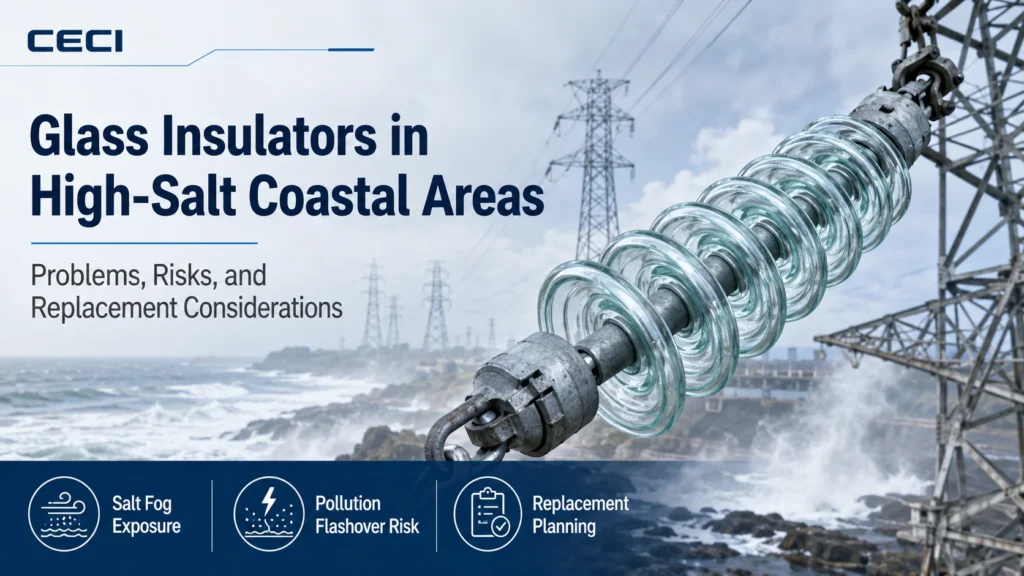
Glass insulators in high-salt coastal areas face a different risk profile than the same products used in inland transmission lines. Salt fog, high humidity, low rainfall, and wind-driven contamination can increase surface leakage current and raise the risk of pollution flashover. For engineers, maintenance teams, EPC buyers, and utility procurement teams, the real question is not whether glass can be used near the coast, but whether the existing glass insulator profile, creepage distance, fittings, and maintenance plan still match the operating environment.
Coastal transmission lines often experience repeated salt deposition. When salt remains dry, the risk may appear manageable. The problem becomes more serious when fog, dew, light rain, or high humidity wets the contamination layer and creates a conductive path across the insulator surface. INMR’s utility case discussion of polluted environments highlights coastal conditions such as strong winds, low rainfall, high humidity, and regular salt fog as key factors in site pollution classification.
Salt fog does not need a heavy storm to create problems. In many coastal regions, contamination accumulates gradually and becomes conductive during early-morning humidity or mist. This can increase leakage current, create dry-band arcing, and eventually lead to pollution flashover.
The risk is higher when natural washing is limited. A line close to the sea, a substation exposed to prevailing coastal winds, or an industrial coastal area with both salt and dust may need a different glass suspension insulator design than a standard inland line. Maintenance teams should track flashover history, visible salt deposits, cleaning frequency, and seasonal humidity patterns before deciding whether the issue is temporary contamination or a long-term design mismatch.
In high-salt areas, glass insulator selection should not be based only on rated voltage. Creepage distance, dry arcing distance, disc spacing, nominal diameter, string length, and profile all affect pollution performance. IEC/TR 60815 guidance, as summarized in INMR’s technical discussion, connects pollution severity with specific creepage distance and profile selection rather than treating creepage length as the only factor.
A standard glass disc may still work when pollution is light, rainfall is adequate, and cleaning access is practical. In heavy salt fog or low-rainfall coastal zones, buyers should evaluate pollution resistant glass insulators, double umbrella profiles, aerodynamic designs, or RTV/silicone-coated options depending on the line condition and inspection plan.
Glass insulators are widely used in overhead lines and substations because they provide mechanical support, stable insulation performance, and easy visual inspection. They are commonly made from toughened glass with metal fittings and are selected by parameters such as rated voltage, mechanical failing load, creepage distance, arcing distance, diameter, height, type, and standard compliance.
The most important risk in coastal glass insulator applications is pollution flashover. Warning signs may include arc marks, visible contamination bands, repeated faults during foggy weather, leakage current traces, broken discs after severe weather, or faults concentrated in low-rainfall seasons.
A single flashover event does not automatically mean every glass insulator should be replaced. However, repeated flashovers on the same section usually indicate that the existing profile, creepage distance, or maintenance strategy should be reviewed. The next step is to collect field data instead of ordering the same replacement units by habit.
Washing can reduce surface contamination, but it may become costly when the cleaning interval keeps shrinking. If crews need frequent washing to keep the line stable, the site may require a different insulator profile or a coated surface. Severe coastal pollution and low natural washing are especially important warning conditions; INMR notes that washing or greasing is often considered for severe pollution and low natural washing environments.
Maintenance teams should compare the cost of washing, outage risk, access difficulty, and replacement labor against the cost of using a pollution resistant glass insulator or another coastal-suitable design. For remote or critical line sections, fewer maintenance visits may justify a more careful replacement decision.
Replacement should be considered when maintenance no longer controls the risk. Common triggers include repeated pollution flashover, shorter washing intervals, visible salt deposit after cleaning, metal fitting corrosion, increased damaged discs, or evidence that the current creepage distance is not enough for the pollution class.
Before replacement, collect site data: voltage level, highest system voltage, mechanical load, current disc quantity, creepage distance, arcing distance, fitting type, distance from the sea, wind direction, rainfall, humidity, ESDD/NSDD data if available, inspection photos, flashover records, and existing drawings. This information helps suppliers judge whether the project needs standard glass, pollution resistant glass, coated glass, or a different configuration.
For coastal transmission line insulator selection, the product profile matters. The following table can guide the first technical discussion with a supplier.
| Coastal condition | Product direction to evaluate | Buyer should confirm |
| Moderate salt fog with manageable maintenance | Standard or pollution resistant glass | Creepage distance, disc count, fitting compatibility |
| Heavy salt fog and low rainfall | Pollution resistant glass or coated glass | Surface behavior, cleaning interval, site pollution level |
| Salt plus dust or sand | Aerodynamic or suitable anti-pollution profile | Dust accumulation, wind exposure, lower-surface contamination |
| Existing glass string replacement | Compatible glass suspension insulator | Spacing, arcing distance, mechanical load, connection type |
| Repeated flashover on critical sections | Profile redesign or coating option | Failure history, outage risk, lifecycle maintenance cost |
CECI’s glass product range includes double umbrella glass insulators, aerodynamic glass insulators, and pollution resistant glass insulator U70BP. The glass insulator category page lists the U70BP option with diameter, spacing, and creepage distance information, making it a relevant product to review for polluted outdoor line conditions.
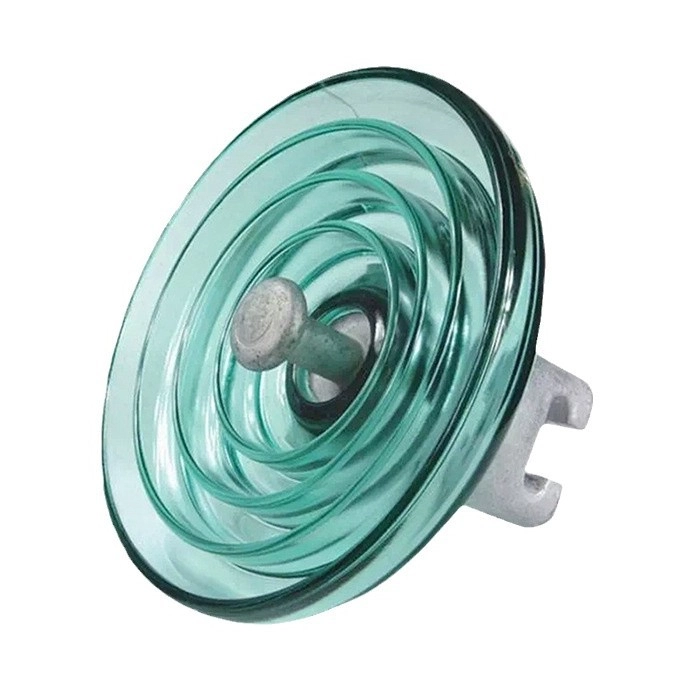
Double umbrella profiles are useful to evaluate where additional creepage and anti-pollution geometry are needed. Aerodynamic glass profiles may be considered where dust and sand accumulation are part of the coastal problem; CECI’s category page describes aerodynamic design as helping reduce dust and sand accumulation on the lower surface.
RTV-coated or silicone-coated glass insulators may be considered when the line owner wants to keep a glass string structure but reduce wetting and cleaning pressure. This can apply to severe salt fog, low rainfall, critical crossings, substations near the shoreline, or line sections where standard glass has repeated flashover issues.
Coated glass is not a default answer. Buyers should confirm whether the coating is factory-applied or field-applied, how coating condition will be inspected, what maintenance method is allowed, and whether the expected coastal environment matches the coating recommendation. The choice depends on application, pollution severity, product size, maintenance access, and utility specifications.
Before replacing coastal glass suspension insulators, confirm the rated voltage, mechanical failing load, creepage distance, arcing distance, nominal diameter, spacing, connection type, existing string length, tower clearance, fitting compatibility, standard requirements, and pollution condition. Product details should be verified against the product specification because dimensions, load ratings, and configurations may vary by model.
A qualified supplier should help compare standard glass, pollution resistant glass, double umbrella, aerodynamic, and coated options based on the site condition. China Energy and Chemical Industry Co., Ltd. supplies glass insulators, composite insulators, and power line fittings, and its production control process includes First Article Inspection before batch production and re-validation when processes, molds, materials, or equipment change.
Procurement teams can review CECI high voltage insulator manufacturer for the broader product scope, check CECI company profile when evaluating supplier background, and prepare drawings, photos, models, quantities, and coastal operating details before using contact CECI for glass insulator RFQ.
Glass insulators can be used in high-salt coastal areas, but standard designs may not be enough where salt fog, humidity, low rainfall, and repeated contamination increase flashover risk. The right decision depends on site pollution severity, creepage distance, profile, fittings, maintenance access, and replacement compatibility.
For coastal replacement projects, buyers should provide the existing model, drawings, photos, voltage level, mechanical load, creepage distance, arcing distance, fitting type, target quantity, application environment, and any flashover or cleaning history. This allows CECI to review whether standard glass, pollution resistant glass, coated glass, or another configuration should be considered.
A: Yes. Glass insulators can be used in coastal transmission lines, but the profile, creepage distance, cleaning plan, and fitting compatibility should match salt fog, humidity, rainfall, and pollution severity.
A: Salt fog and other contaminants can accumulate on the glass surface. When moisture from fog, dew, light rain, or humidity wets the pollution layer, leakage current may increase and create conditions for dry-band arcing and pollution flashover.
A: Replacement should be evaluated when flashover repeats, washing intervals become too short, broken discs increase, corrosion appears, or the existing creepage distance and profile no longer match the coastal pollution condition.
A: A pollution resistant glass insulator may be more suitable when salt fog, low rainfall, or contamination creates higher flashover risk. The final choice should be verified against voltage level, mechanical load, creepage distance, arcing distance, and project specifications.
A: Send the voltage level, system requirements, mechanical load, existing insulator model, creepage distance, arcing distance, fitting type, drawings, photos, quantity, coastal environment details, and any maintenance or flashover records.

 Room 1502, NO.12, Shangwu Waihuan Road, CBD, Zhengzhou, China
 +86-18937178812
 sales@gridinsulators.com


 October 22, 2026