what are you looking for?

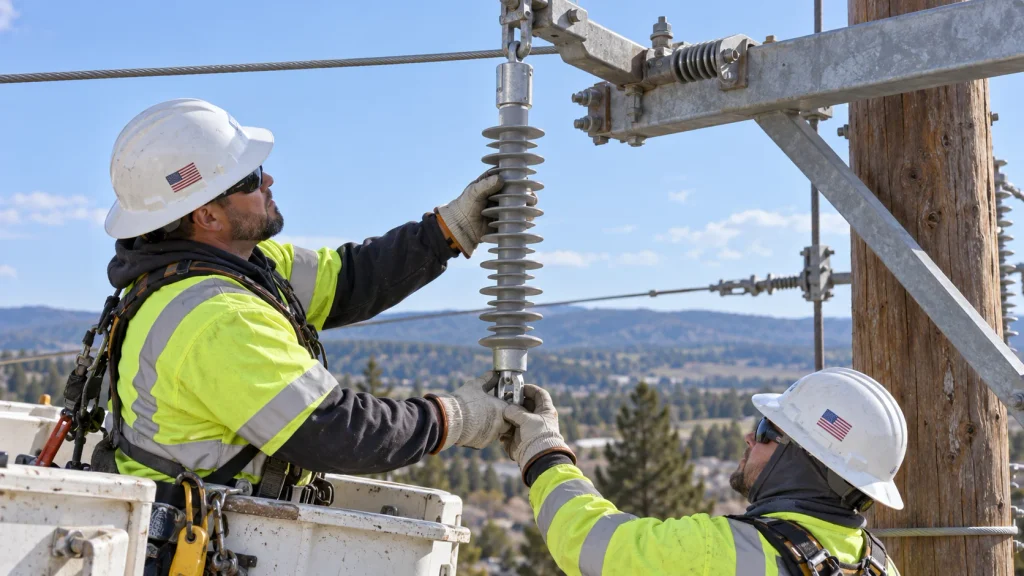
For a utility retrofit, the polymer insulator vs porcelain insulator decision is rarely only a material comparison. The replacement must fit an existing structure, reach the work site safely, meet the original electrical and mechanical duty, and leave a maintenance plan the crew can actually execute. A polymer or composite unit can simplify handling, but only when weight, interfaces, clearances, inspection, and records are checked together. This checklist gives utility engineers, EPC teams, and procurement staff a practical way to compare options before issuing an RFQ.
A new line can be designed around the selected insulator. A retrofit inherits tower geometry, conductor hardware, access routes, outage windows, and replacement practices. Those constraints change the value of a lighter component. The decision is not simply whether polymer is newer than porcelain; it is whether the proposed assembly can be transported, lifted, installed, inspected, and replaced without creating a new interface or clearance problem.
Treat the existing porcelain unit as a controlled reference. Record its voltage class, mechanical duty, overall length, coupling arrangement, creepage and arcing distances, and the connected hardware. Then compare a candidate composite insulator on the same design basis. The final choice remains conditional on the approved drawing, project standard, and service environment.
Weight affects more than freight. It changes how many people can move a component, what lifting equipment is needed, how long a line crew remains on a structure, and whether a remote or congested site can be served within the outage. Polymer insulators typically use a fiberglass or FRP core rod, silicone rubber sheds, and metal end fittings, while porcelain units use a rigid ceramic body with metal hardware. The actual difference depends on voltage, length, mechanical load, and fitting design, so request confirmed shipping and unit weights rather than relying on a generic percentage.
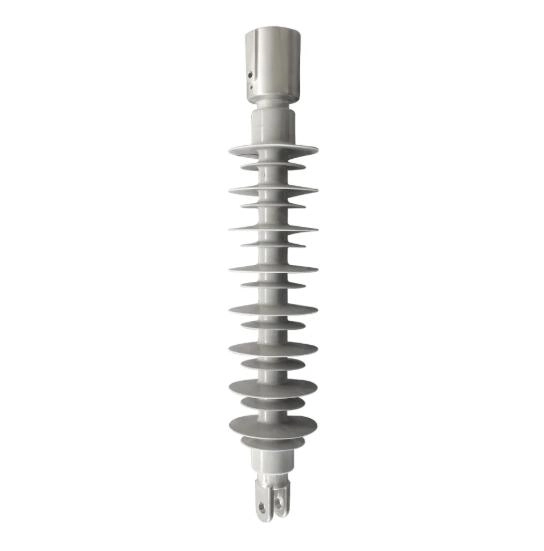
A lighter polymer assembly may reduce handling effort, but it does not eliminate safe-lifting controls. Protect the silicone housing from cuts, abrasion, sharp edges, and uncontrolled contact with hardware during installation.
The replacement must carry the required mechanical failing load and fit the existing load path. Verify suspension, tension, line-post, or other duty; conductor and wind loading assumptions; and the direction of the applied force. A polymer insulator can be lighter yet still fail a retrofit if its end fitting, pin, hole, or coupling geometry does not match the clamp or yoke already on the line.
Use a dimensional interface schedule, not only a product name. The schedule should show the insulator and its mating line hardware as one assembly so a visually similar replacement cannot pass with a different clearance or coupling position.
Maintenance planning should describe what the crew will inspect, how contamination will be assessed, and how a suspect unit will be removed. Silicone rubber surfaces can provide hydrophobic behavior and useful pollution performance, but hydrophobicity and service life depend on material, aging, contamination, and operating conditions. Avoid labeling any insulator maintenance-free. Define the inspection evidence and the action limits instead.
For polymer units, visual checks should look for cuts, tears, tracking, erosion, exposed core, shed displacement, housing damage, and problems at the fitting seal. For porcelain, the workflow may emphasize chips, cracks, punctures, cement condition, and hardware corrosion. In both cases, contamination, washing access, wildlife damage, and nearby construction should be recorded. The inspection method should be compatible with the utility’s outage, climbing, drone, or ground-based practice.
Ask the supplier to identify cleaning restrictions, storage limits, packaging protection, and replacement traceability. A clear record of model, drawing revision, lot, and installed location makes the next intervention faster and reduces the risk of mixing incompatible fittings.
An RFQ should let a supplier respond field by field. Attach the as-built drawing, photographs of the attachment, and any known failure or contamination history. Include the following information:
For a starting product reference, review the CECI polymer insulators category and then confirm the exact retrofit dimensions and fittings.
The best material choice can be undermined by a weak work plan. Sequence the retrofit around the outage, conductor support, access, and temporary protection. Confirm whether the existing hardware can be reused or whether the replacement requires a new clamp, yoke, pin, or bracket. Check torque, cotter pins, locking parts, and sealing steps against the approved instructions.
Before release, run a fit check with the actual drawing and, when practical, a representative assembly. Record where the unit will be lifted, where it may contact tools, and how it will be protected during staging. If the retrofit uses new line hardware, evaluate the complete interface rather than approving the insulator in isolation. CECI also lists line-hardware components such as suspension clamps, connectors, brackets, and arcing accessories that may need to be reviewed with the insulator.
Use the overhead line hardware fittings and accessories category as a cross-check when the replacement changes the connected hardware.
Before mass production, approve a first article made with the intended materials, molds, tooling, fittings, and assembly sequence. Confirm visual condition, critical dimensions, mechanical and electrical requirements, interface geometry, and the agreed records. A first article is useful only when it represents the process that will make the production batch.
CECI’s quality process specifies first-article inspection before each batch, production after approval, and re-validation after changes to processes, molds, materials, or equipment. Apply the same discipline to supplier substitutions, fitting changes, tooling repairs, and performance-critical dimensions. The approval record should identify the revision, lot, reviewers, open actions, and re-approval triggers.
CECI China Energy and Chemical Industry Co., Ltd. supplies composite and polymer insulators for transmission, distribution, substations, railway systems, industrial power applications, and demanding outdoor environments. Its product information covers rated voltage, mechanical failing load, creepage and arcing distance, shed geometry, core rod diameter, end-fitting type, and related hardware. Final selection still depends on the project drawing, loading, clearances, contamination, and approval criteria.
For a useful technical review, send the existing model or drawing, voltage, mechanical duty, dimensions, fitting interface, site conditions, quantity, shipping constraints, and required inspection records. This gives the supplier enough context to confirm whether a polymer insulator replacement is a true fit rather than a catalog substitute.
A practical polymer insulator vs porcelain decision for a utility retrofit starts with the work site and ends with a controlled, documented assembly. Compare weight and handling, then verify mechanical load, dimensions, clearances, maintenance actions, fittings, first-article evidence, and change control. For a project-specific fit check, contact the CECI technical team with the drawing, operating conditions, quantity, and replacement constraints.
They are often lighter for comparable applications, but the result depends on voltage, length, mechanical load, fittings, and accessories. Confirm the actual unit and shipping weights for the approved configuration.
Sometimes, but only after the coupling geometry, loads, clearances, orientation, and condition of the hardware are checked against the replacement drawing.
The utility should define visual inspection, contamination assessment, washing or access rules, and damage limits. Polymer construction can reduce some handling and pollution concerns, but it should not be described as maintenance-free.
Send the existing drawing or model, voltage, mechanical duty, dimensions, fitting details, clearances, site environment, quantity, handling limits, and first-article or test-record requirements.

 Room 1502, NO.12, Shangwu Waihuan Road, CBD, Zhengzhou, China
 +86-18937178812
 sales@gridinsulators.com


 October 22, 2026
